
The Future of Forex Investing in 2026–2027

The Future of Forex Investing in 2026–2027

The foreign exchange (Forex) market has always evolved alongside global economic, political, and technological developments. As we move through 2026 and into 2027, investors are entering an environment shaped by innovation, changing monetary policies, digital transformation, and shifting global economic dynamics.

While no one can predict market movements with certainty, understanding the trends influencing the Forex market can help investors make more informed decisions and prepare for an increasingly connected financial world.

In this article, we explore the key developments expected to shape the future of Forex investing over the coming years.

A More Data-Driven Market

Financial markets have become increasingly dependent on real-time information. Economic reports, central bank announcements, inflation data, employment figures, and geopolitical events now reach investors within seconds.

As technology continues to improve, investors have access to:

  • Faster market news

  • Advanced charting platforms

  • Real-time economic calendars

  • Artificial intelligence-powered analytics

  • Automated market alerts

This increased access to information allows investors to react more efficiently while emphasizing the importance of separating meaningful trends from short-term market noise.

Artificial Intelligence and Automation

Artificial intelligence (AI) is becoming an increasingly valuable tool across the financial industry.

Professional investment firms now use AI to support tasks such as:

  • Market research

  • Pattern recognition

  • Data analysis

  • Portfolio monitoring

  • Risk assessment

However, AI is not a replacement for human judgment.

Successful investment decisions still rely on experience, disciplined risk management, and an understanding of economic conditions. The future of Forex investing is likely to combine advanced technology with professional expertise rather than relying entirely on automated systems.

Central Banks Will Continue to Shape Currency Markets

Central banks remain one of the most influential forces in the Forex market.

Interest rate decisions, inflation targets, and monetary policy guidance can significantly affect currency valuations.

During 2026–2027, investors are expected to continue monitoring:

  • Inflation trends

  • Interest rate adjustments

  • Economic growth

  • Employment conditions

  • Monetary policy statements

As economies adjust to changing global conditions, central bank decisions will likely remain a major driver of currency movements.

Increased Market Volatility

Global markets are becoming increasingly interconnected.

Political developments, international trade, technological disruption, and unexpected economic events can quickly influence investor confidence.

While volatility may create opportunities, it also increases uncertainty.

For this reason, investors are placing greater emphasis on:

  • Capital preservation

  • Diversification

  • Disciplined risk management

  • Long-term planning

Managing risk effectively may become even more important than attempting to predict every market movement.

The Growing Importance of Professional Fund Management

As financial markets become more sophisticated, many investors are choosing professional fund management rather than managing investments independently.

Professional managers provide:

  • Continuous market monitoring

  • Structured investment strategies

  • Comprehensive economic analysis

  • Portfolio risk management

  • Disciplined decision-making

For investors with limited time or market experience, professional management can provide access to experienced oversight while maintaining a long-term investment focus.

Technology Is Making Markets More Accessible

The barriers to participating in financial markets continue to decline.

Modern investment platforms provide:

  • Mobile trading access

  • Real-time portfolio tracking

  • Educational resources

  • Advanced analytical tools

  • Secure digital transactions

As technology becomes more accessible, investor education will become increasingly important.

Access to markets alone does not guarantee successful investing. Understanding market fundamentals and maintaining disciplined investment practices remain essential.

Greater Focus on Risk Management

The future of Forex investing is expected to place even greater emphasis on responsible risk management.

Professional investors increasingly recognize that preserving capital is fundamental to achieving long-term financial objectives.

Modern investment strategies often incorporate:

  • Position sizing

  • Portfolio diversification

  • Exposure limits

  • Ongoing market evaluation

  • Adaptive investment strategies

Rather than pursuing excessive risk, many investors are focusing on building sustainable, long-term portfolios.

The Role of Global Economic Shifts

Emerging markets continue to play an increasingly important role in the global economy.

Changing trade relationships, infrastructure development, technological innovation, and demographic trends may influence currency markets over the coming years.

Investors who understand these broader economic developments are often better positioned to interpret long-term market trends instead of reacting solely to short-term price fluctuations.

Education Will Continue to Be a Competitive Advantage

As financial information becomes more widely available, the ability to understand and interpret that information becomes increasingly valuable.

Successful investors continue to invest in:

  • Financial education

  • Market research

  • Economic awareness

  • Investment discipline

  • Continuous learning

Knowledge helps investors develop confidence while making more informed decisions in changing market conditions.

Building a Long-Term Investment Mindset

Short-term market fluctuations often attract attention, but long-term success is typically built through consistency rather than speculation.

The future of Forex investing is likely to reward investors who:

  • Remain disciplined during market volatility

  • Focus on long-term financial objectives

  • Apply structured risk management

  • Make decisions based on research rather than emotion

  • Continuously expand their financial knowledge

Developing a long-term mindset allows investors to navigate changing market environments with greater confidence.

Looking Ahead

The Forex market will continue to evolve as technology advances, economies adapt, and global financial systems become increasingly interconnected.

While innovation is transforming the way investors access information and manage portfolios, the fundamental principles of successful investing remain unchanged: education, discipline, patience, and effective risk management.

Rather than attempting to predict every market movement, investors can prepare for the future by building a strong understanding of market fundamentals and adopting a structured, long-term approach.

Final Thoughts

The future of Forex investing in 2026–2027 presents both opportunities and challenges. Technological innovation, evolving economic conditions, and changing global markets will continue to influence currency movements and investment strategies.

At Enso Assets, we believe that successful investing is built on informed decision-making, responsible risk management, and a commitment to long-term financial growth. By combining market expertise with disciplined investment principles, we aim to help investors navigate the evolving Forex landscape with confidence and clarity.
How Currency Trading Works: Understanding Currency Pairs

How Currency Trading Works: Understanding Currency Pairs

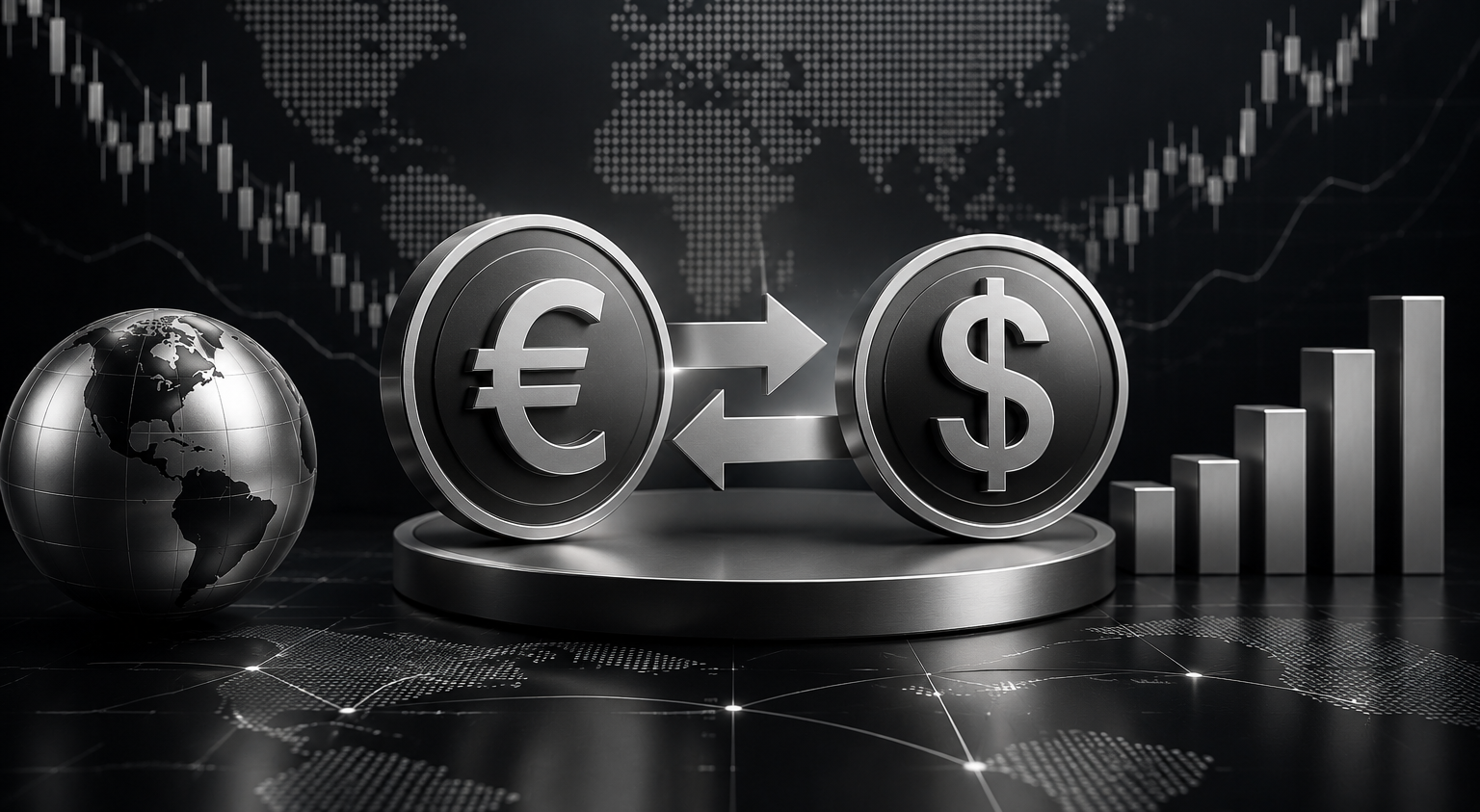
The foreign exchange (Forex) market is the world’s largest financial market, with trillions of dollars traded every day. Unlike stock markets, where investors buy shares of companies, the Forex market involves the exchange of one currency for another.

At the heart of every Forex transaction is a currency pair. Understanding how these pairs work is one of the first steps toward understanding the global currency market and making informed investment decisions.

What Is a Currency Pair?

A currency pair represents the value of one currency relative to another. Since currencies are always exchanged for one another, they are quoted in pairs.

For example:

EUR/USD

This pair compares the Euro (EUR) with the US Dollar (USD).

The first currency in the pair is called the base currency, while the second is known as the quote currency.

The quoted price tells you how much of the quote currency is required to purchase one unit of the base currency.

For example:

EUR/USD = 1.12

This means 1 Euro is worth 1.12 US Dollars.

Why Are Currencies Traded in Pairs?

Every international transaction involves exchanging one currency for another.

Whether a business is importing goods, a tourist is traveling abroad, or an investor is purchasing foreign assets, one currency must be exchanged for another. This constant demand for currency exchange creates the global Forex market.

When investors believe one currency will strengthen against another, they may choose to buy that currency pair. Likewise, if they expect a currency to weaken, they may decide to sell it.

Understanding the Base and Quote Currency

Let’s examine another example:

GBP/USD = 1.35

  • Base Currency: British Pound (GBP)
  • Quote Currency: US Dollar (USD)

The exchange rate means 1 British Pound equals 1.35 US Dollars.

If the exchange rate rises from 1.35 to 1.38, the British Pound has strengthened against the US Dollar.

If it falls from 1.35 to 1.30, the US Dollar has strengthened relative to the British Pound.

Understanding this relationship helps investors interpret market movements more effectively.

The Three Types of Currency Pairs

1. Major Currency Pairs

Major pairs include the world’s most traded currencies and always feature the US Dollar.

Examples include:

  • EUR/USD
  • GBP/USD
  • USD/JPY
  • USD/CHF
  • AUD/USD
  • USD/CAD
  • NZD/USD

These pairs generally offer high liquidity and relatively lower transaction costs because they are traded in large volumes.

2. Minor Currency Pairs

Minor pairs, also called cross-currency pairs, do not include the US Dollar but still involve major global currencies.

Examples include:

  • EUR/GBP
  • EUR/JPY
  • GBP/JPY
  • AUD/NZD

These pairs may experience different price movements depending on regional economic conditions.

3. Exotic Currency Pairs

Exotic pairs combine a major currency with the currency of an emerging or smaller economy.

Examples include:

  • USD/TRY
  • EUR/ZAR
  • USD/MXN

Exotic pairs can experience larger price swings and lower liquidity, making them generally more volatile than major currency pairs.

What Causes Currency Pair Prices to Change?

Currency values are constantly changing as market participants react to new information.

Some of the most important factors influencing exchange rates include:

Interest Rates

Central bank decisions regarding interest rates often have a significant impact on currency values.

Higher interest rates may attract foreign investment, increasing demand for a country’s currency.

Inflation

Countries with stable and controlled inflation generally maintain stronger purchasing power, which can influence currency demand.

Unexpected inflation data often causes noticeable market movements.

Economic Growth

Indicators such as Gross Domestic Product (GDP), employment reports, and retail sales help investors evaluate the strength of an economy.

Strong economic performance can improve confidence in a country’s currency.

Political Stability

Governments, elections, policy changes, and geopolitical events can all influence investor confidence.

Political uncertainty may increase market volatility and affect currency prices.

Market Sentiment

Investor expectations and global risk appetite also play an important role.

During periods of economic uncertainty, investors often seek currencies considered relatively stable, while stronger economic outlooks may increase demand for higher-growth currencies.

Why Currency Pairs Matter to Investors

Currency pairs provide insight into the relative strength of different economies.

For example:

  • A strengthening US Dollar may influence international trade and commodity prices.
  • A weakening Euro may affect European exports.
  • Changes in exchange rates can impact multinational companies and global investment portfolios.

Understanding currency pairs helps investors better interpret market conditions and the factors driving financial markets.

The Importance of Risk Management

Although understanding currency pairs is essential, successful participation in the Forex market requires more than simply predicting price movements.

Market conditions can change quickly, making disciplined risk management a key part of any investment strategy.

Professional investors often focus on:

  • Careful position sizing
  • Diversification
  • Defined risk limits
  • Long-term planning
  • Continuous market analysis

A structured approach helps investors manage uncertainty while remaining focused on their financial objectives.

Final Thoughts

Currency pairs are the foundation of the Forex market. Every exchange rate reflects the relationship between two economies and is influenced by a wide range of global factors, including interest rates, inflation, economic growth, and investor sentiment.

For anyone beginning their journey into Forex, understanding how currency pairs work provides an essential foundation for interpreting market movements and making informed investment decisions.

At Enso Assets, we believe that successful investing begins with education. By understanding the fundamentals of the Forex market and combining that knowledge with disciplined risk management, investors can approach global financial markets with greater confidence and a long-term perspective.

Why Professional Fund Management Matters in Forex

Why Professional Fund Management Matters in Forex

The foreign exchange (Forex) market is the largest and most liquid financial market in the world, with trillions of dollars traded daily. Its accessibility and potential opportunities have attracted investors from across the globe. However, the same market that offers opportunity also presents significant complexity and risk.

For many investors, navigating the Forex market independently can be challenging. Market movements are influenced by a wide range of economic, political, and financial factors, making informed decision-making essential. This is where professional fund management can make a meaningful difference.

Rather than attempting to monitor markets full-time or make emotional investment decisions, investors may choose to have their capital managed by experienced professionals who follow structured strategies and disciplined risk management practices.

Understanding Professional Fund Management

Professional fund management involves entrusting investment capital to experienced portfolio managers or trading professionals who make investment decisions on behalf of clients.

Instead of relying on guesswork or reacting to short-term market fluctuations, professional managers use research, technical analysis, economic data, and established risk management principles to guide their decisions.

The objective is not to predict every market movement perfectly, but to manage investments with consistency, discipline, and a long-term perspective.

The Challenges of Managing Forex Investments Independently

The Forex market operates 24 hours a day, five days a week. Prices can change rapidly in response to economic reports, central bank announcements, geopolitical developments, and shifts in investor sentiment.

Individual investors often face several challenges, including:

  • Limited time to monitor global markets
  • Difficulty interpreting economic data
  • Emotional decision-making during market volatility
  • Inconsistent trading strategies
  • Limited knowledge of risk management techniques

Without a structured approach, these challenges can lead to impulsive decisions that may negatively impact long-term investment outcomes.

The Value of Experience

Professional fund managers spend years developing market knowledge and refining their investment processes.

They continuously monitor:

  • Global economic developments
  • Interest rate decisions
  • Inflation trends
  • Employment data
  • Currency correlations
  • Technical market structures
  • Market sentiment

By combining multiple sources of information, professional managers can make more informed decisions than relying solely on short-term market movements or speculation.

Experience also helps managers remain disciplined during periods of uncertainty, avoiding emotional reactions that can affect investment performance.

Risk Management Comes First

One of the most important aspects of professional fund management is risk management.

Successful investing is not simply about generating returns—it is also about protecting capital during periods of market uncertainty.

Professional fund managers typically establish clear risk management guidelines before entering any position.

These may include:

  • Position sizing based on overall portfolio risk
  • Diversification across strategies or currency pairs
  • Clearly defined risk limits
  • Continuous monitoring of market exposure
  • Adapting strategies as market conditions evolve

A disciplined approach to risk management helps reduce unnecessary exposure and supports more consistent long-term decision-making.

A Disciplined Investment Process

Markets are influenced by both facts and emotions. News headlines, unexpected events, and sudden price movements can tempt investors to make impulsive decisions.

Professional fund managers rely on structured investment processes rather than emotional reactions.

Their decisions are typically based on predefined criteria, including:

  • Market analysis
  • Risk assessment
  • Technical confirmation
  • Economic outlook
  • Portfolio objectives

Following a disciplined process helps maintain consistency even during periods of heightened market volatility.

Continuous Market Monitoring

Financial markets evolve constantly.

Professional fund managers dedicate significant time to monitoring:

  • Economic calendars
  • Central bank communications
  • Political developments
  • Global financial news
  • Market trends
  • Technical indicators

This continuous analysis enables managers to respond thoughtfully to changing market conditions while keeping long-term objectives in focus.

For many individual investors, maintaining this level of market awareness alongside personal and professional responsibilities can be difficult.

Long-Term Perspective

One common mistake among new investors is focusing solely on short-term gains.

Professional fund management encourages a more balanced perspective by emphasizing disciplined decision-making and long-term capital growth rather than reacting to daily market fluctuations.

Markets naturally experience periods of volatility. A long-term approach helps investors remain focused on broader objectives instead of allowing temporary market movements to influence investment decisions.

Transparency and Communication

Professional fund management also involves maintaining clear communication with investors.

Transparency helps clients understand:

  • The overall investment approach
  • Risk management principles
  • Market conditions
  • Portfolio objectives
  • Performance reporting

An informed investor is better equipped to maintain confidence during both favorable and challenging market environments.

Who Can Benefit from Professional Fund Management?

Professional fund management may be suitable for individuals who:

  • Want exposure to the Forex market without actively trading themselves
  • Prefer experienced professionals to manage investment decisions
  • Value disciplined risk management
  • Have limited time to monitor global financial markets
  • Seek a structured, long-term investment approach

Every investor has different financial goals and risk tolerance. Professional management allows investment strategies to be guided by a systematic process rather than day-to-day emotions.

Choosing the Right Investment Partner

Selecting a professional fund manager is an important decision.

Investors should consider factors such as:

  • Experience and expertise
  • Investment philosophy
  • Risk management framework
  • Transparency and communication
  • Commitment to ethical investment practices
  • Long-term approach to portfolio management

A trusted investment partner should prioritize responsible decision-making while maintaining clear communication throughout the investment journey.

Final Thoughts

The Forex market offers opportunities, but it also demands knowledge, discipline, and careful risk management. Successfully navigating this dynamic environment requires more than simply identifying market trends—it requires a consistent investment process built on experience and sound decision-making.

Professional fund management provides investors with access to structured strategies, ongoing market analysis, and disciplined risk management practices that can help support long-term financial objectives.

At Enso Assets, we believe successful investing begins with informed decisions, responsible risk management, and a commitment to long-term value. Our approach is centered on transparency, discipline, and helping investors navigate the evolving global financial landscape with confidence.

Key Economic Indicators Every Investor Should Know

Key Economic Indicators Every Investor Should Know

Financial markets are constantly responding to new information. Every day, governments, central banks, and financial institutions release economic data that can influence investor sentiment and market prices. For anyone investing in global markets, understanding these indicators is essential to making informed decisions.

Economic indicators provide insight into the health of an economy and often influence currency values, stock markets, interest rates, and investment opportunities. While no single indicator tells the full story, together they help investors understand broader market trends and potential risks.

1. Gross Domestic Product (GDP)

Gross Domestic Product (GDP) measures the total value of goods and services produced within a country over a specific period. It is one of the most widely used indicators of economic growth.

A growing GDP generally signals a healthy economy with increasing business activity, employment, and consumer spending. Strong economic growth can strengthen a country’s currency and improve investor confidence.

Conversely, slowing or negative GDP growth may indicate an economic slowdown or recession, often leading to increased market uncertainty.

Why it matters to investors:
  • Indicates the overall health of an economy
  • Influences long-term investment decisions
  • Can impact currency and equity markets

2. Inflation Rate

Inflation measures the rate at which the prices of goods and services increase over time. Moderate inflation is a normal part of a growing economy, but excessively high inflation can reduce purchasing power and create economic instability.

Central banks closely monitor inflation when deciding whether to adjust interest rates.

Common inflation reports include:

  • Consumer Price Index (CPI)
  • Producer Price Index (PPI)
Why it matters to investors:
  • Influences interest rate decisions
  • Affects consumer spending
  • Can increase market volatility

3. Interest Rates

Interest rates are among the most influential factors affecting financial markets. Central banks adjust interest rates to help control inflation and support economic stability.

Higher interest rates generally strengthen a currency because they may attract foreign investment seeking higher returns. Lower interest rates often encourage borrowing and economic growth but can weaken a currency.

Why it matters to investors:
  • Affects borrowing costs
  • Influences currency values
  • Impacts stock and bond markets
  • Shapes investment strategies

4. Employment Data

Employment reports provide valuable information about the strength of a country’s labor market.

One of the most closely watched reports globally is the Non-Farm Payroll (NFP) report in the United States, which measures job creation outside the agricultural sector.

Strong employment figures often suggest a healthy economy with increasing consumer confidence, while weak employment numbers may indicate slowing economic activity.

Why it matters to investors:
  • Reflects economic strength
  • Can significantly influence market sentiment
  • Often causes increased market volatility when released

5. Consumer Confidence

Consumer confidence measures how optimistic people feel about their financial situation and the overall economy.

When consumers feel confident, they are generally more willing to spend money, supporting economic growth. Lower confidence may result in reduced spending and slower economic activity.

Why it matters to investors:

  • Indicates future consumer spending
  • Helps assess economic momentum
  • Can influence retail and service sector performance

6. Purchasing Managers’ Index (PMI)

The Purchasing Managers’ Index (PMI) measures business activity within the manufacturing and services sectors.

A PMI reading above 50 generally indicates economic expansion, while a reading below 50 may suggest contraction.

Because businesses often respond quickly to changes in demand, PMI is considered one of the earliest indicators of economic performance.

Why it matters to investors:
  • Provides an early signal of economic trends
  • Reflects business confidence
  • Can influence market expectations before other major reports are released

7. Retail Sales

Retail sales measure consumer spending across various sectors of the economy.

Since consumer spending represents a significant portion of economic activity in many countries, strong retail sales often indicate economic strength.

Weak retail sales may suggest declining consumer confidence or slowing economic growth.

Why it matters to investors:
  • Reflects consumer demand
  • Helps evaluate economic growth
  • Can impact currency and equity markets

8. Trade Balance

The trade balance compares a country’s exports with its imports.

A trade surplus occurs when exports exceed imports, while a trade deficit occurs when imports exceed exports.

Trade balances can influence currency demand and long-term economic performance.

Why it matters to investors:
  • Indicates international competitiveness
  • Can influence exchange rates
  • Helps assess economic stability

9. Central Bank Announcements

Central banks play a critical role in financial markets by setting monetary policy.

Investors closely monitor statements and policy decisions from major central banks, as these announcements can influence interest rates, inflation expectations, and currency movements.

Even subtle changes in a central bank’s outlook can have a significant impact on global markets.

Why it matters to investors:
  • Influences market expectations
  • Can trigger significant price movements
  • Helps investors anticipate future economic conditions

Why These Indicators Matter Together

No economic indicator should be viewed in isolation. Professional investors consider multiple data points to develop a more complete understanding of market conditions.

For example, strong GDP growth combined with rising inflation and tightening monetary policy may signal a different investment environment than strong GDP growth accompanied by stable inflation and low interest rates.

Understanding how these indicators interact enables investors to make more informed decisions while managing risk more effectively.

Final Thoughts

Economic indicators are valuable tools for understanding the forces that shape financial markets. While they cannot predict future market movements with certainty, they provide essential insights into economic conditions, investor sentiment, and potential opportunities.

For long-term investors, staying informed about key economic data helps build confidence, supports disciplined decision-making, and encourages a broader perspective on market developments.

At Enso Assets, we believe that informed investors are empowered investors. By combining market knowledge with thoughtful risk management and a long-term approach, individuals can make more confident financial decisions in an ever-changing global economy.